

The air in the Cairns industrial corridor feels different this December. It isn’t just the humidity of the wet season building over the Macalister Range; it is the palpable pressure of an economy undergoing a tectonic shift.
Walk through the boardrooms of the city’s property agencies or the site offices in the Southern Corridor, and the mood has moved from the cautious optimism of the post-pandemic years to something sharper, harder, and more urgent.
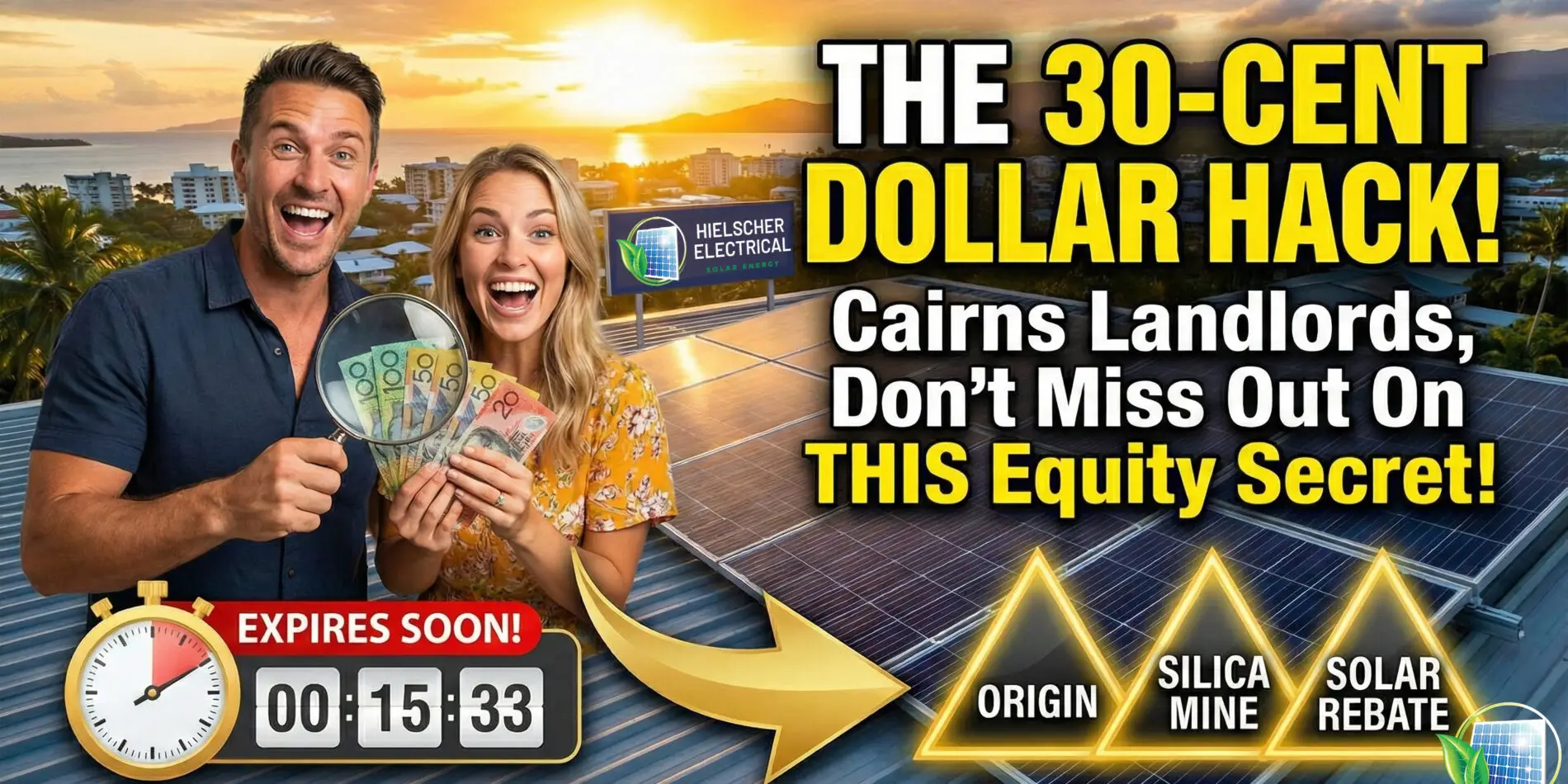
Three specific events have collided in the last six months to create a “Golden Triangle” of opportunity for the Far North Queensland property market. First, the “Great Wall of Ergon” was breached, bringing retail competition to the region for the first time. Second, a $45 million AUD stake was driven into the soil at Mourilyan, signaling the industrial maturation of the Far North. And finally, on December 12, the State Government dropped a $26.3 million “Supercharged Solar for Renters” rebate on the table.
For the casual observer, these are separate headlines. For the strategic investor, they are a single, flashing signal: The era of the passive, “set-and-forget” property is dead.
If you own a home or an investment property in Cairns, you are standing on the edge of a cliff. You can either build a bridge to the new reality, or you can fall into the trap of the old ways. Here is your roadmap to surviving the shift.
The “New Normal” Paradox
To understand why this moment is critical, we must first look at the uncomfortable reality of the Cairns housing market.
We have entered a “new normal” of permanently low vacancy rates. The days of 3-4% vacancy are gone; we are operating in a sub-1% environment. Conventionally, this makes landlords lazy. When 50 people line up for a rental inspection in Smithfield or Edmonton, why would an investor spend a cent on improvements? Why install solar when the tenant has no choice?
This is the “Slumlord Fallacy,” and it is financially dangerous.
The “New Normal” means that while occupancy is high, tenant solvency is fragile. Rents are at record highs. Cost of living is biting. A tenant paying $650 a week who gets hit with an $900 quarterly Ergon bill is a tenant on the brink of default.
Smart investors know that in a high-rent environment, the only lever left to pull is Total Cost of Occupancy. By deleting the electricity bill, you stabilise the tenant, justify the premium rent, and protect the yield.
But there is a second factor driving this: The Silica Signal.
The recent $45 million investment into the Mourilyan Silica Sands project is not just a mining story; it is a demographic one. Silica is the backbone of the global solar and semiconductor supply chain. This mine brings industrial capability, logistics, and—crucially—a new tier of workforce to the Cassowary Coast and Cairns.
These are not transient backpackers. These are engineers, geologists, and logistics managers. They are Premium Tenants. They are on six-figure contracts, they have families, and they demand modern infrastructure. They will not rent a “hot box” with 1990s halogen downlights and no energy efficiency.
The market is bifurcating. There is the “desperation market” (low quality, high turnover risk), and there is the “industrial professional market” (high yield, long tenure). The new rebate is your ticket from the former to the latter.
The Financial Anomaly: The “Double Dip”
On December 12, the Crisafulli Government officially opened the Supercharged Solar for Renters scheme. The headline is attractive: up to $3,500 to install solar on rental properties (houses, townhouses, duplexes) renting for under $1,000/week.
Most investors read the headline—”$3,500 off”—and moved on. They missed the critical detail: It stacks.
Unlike many government schemes that cancel each other out, this state rebate sits on top of the existing Federal Small-scale Technology Certificate (STC) incentive. This creates a financial anomaly—a brief window where the government is effectively paying for the majority of your asset.
Let’s run the hard numbers on a commercial-grade 6.6kW Solar System:
- Gross Market Value: ~$7,500
- Federal STC Discount: -$2,500 (approx. automatic point-of-sale discount)
- Advertised “Retail” Price: ~$5,000
- QLD Renters Rebate: -$3,500 (Cash back to you)
- Your Net Cost: ~$1,500
The “Free Equity” Play You are spending ~$1,500 to attach a $7,500 asset to your property. Furthermore, under Division 40 of the Tax Act, you can depreciate the entire asset value (not just your contribution) at 10% per year using the diminishing value method.
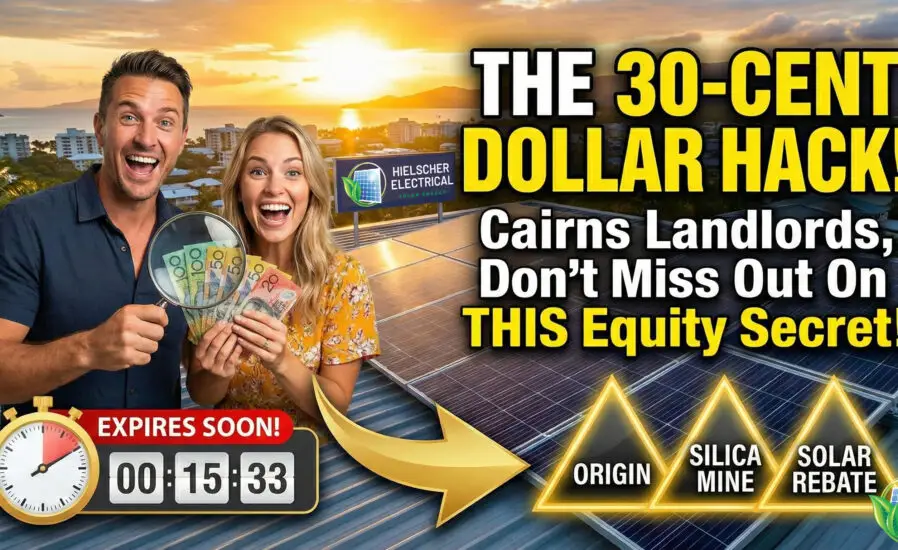
You are effectively buying a tax shield for 30 cents on the dollar. The yield increase is just a bonus.
The Trap: The “Conditional Approval” Poison Pill
If this sounds like free money, be warned: there is a catch. The government has built a “competence test” into the rebate to weed out the cowboys.
Unlike the standard STC rebate which is claimed after the job is done, this program requires Conditional Approval from QRIDA (Queensland Rural and Industry Development Authority) before a single panel is screwed to the roof.
The Risk: If you hire a “cheap and cheerful” solar installer who skips the paperwork, or if you install the system on a Tuesday and the approval stamp comes through on a Wednesday, you get $0. There is no retrospective claiming.
We saw this happen in 2019. The previous government ran a nearly identical trial in Townsville and Gladstone. It was a disaster. Of the 1,000 rebates available, only about 660 were claimed. Why? Because disorganised solar companies installed systems without approval, leaving landlords with the full bill.
This rebate is not for the “one-man-band.” It is for Process-Driven Retailer‘s like Hielscher Electrical.
“If your installer does not have a dedicated compliance officer handling the QRIDA portal, you are gambling with $3,500 of your own money.”
The Origin Factor: The Multiplier Effect
Finally, we must address the “Elephant in the Room”—or rather, the end of the Elephant.
In May 2025, Origin Energy officially entered the regional Queensland market, ending the decades-long Ergon monopoly. While the rollout has been gradual, the psychological shift is instant.
For the first time in history, Cairns tenants have Choice. A rental property with solar allows a tenant to access specific “Solar Soaker” tariffs or higher Feed-in Tariffs that Ergon never offered. The synergy between a 6.6kW system and a competitive retailer plan can effectively zero out a household’s energy costs by earning 18c/kWh for exports—double the Ergon rate—and access $1/kWh VPP credits. This effectively zeros out their utility risk.
This creates a “Lock-in Effect.” Once a tenant experiences a $0 power bill in a Cairns summer, they are financially addicted to your property. They cannot afford to move to a non-solar house where their costs would jump by $3,000 a year. Solar is no longer just a power station; it is vacancy insurance.
For Homeowners reading this: Do not think this doesn’t apply to you. While you may not get the $3,500 rental rebate, the “Origin Factor” applies doubly to you. With the ability to shop around for tariffs, the ROI on a solar-plus-battery system has never been faster. You are the CEO of your own home; manage the asset accordingly.
A Call to Arms: Survive or Thrive?
The “Solar Coaster” is unforgiving. The 6,500 rental rebates available statewide are a drop in the ocean. They will likely be exhausted within 6 to 8 months.
The question is not whether the energy transition is happening—the mines and the markets have already decided that. The question is whether you will capitalise on it.
Your Investment Checklist:
- Audit Your Portfolio: Immediately identify any property you own renting for under $1,000/week.
- Ignore “Bill Savings”: Stop thinking like a charity. Start thinking like a Fund Manager. Focus on Depreciation and Asset Value.
- Secure the Admin Moat: Do not move until you have the QRIDA approval number. Partner with an electrical firm that handles the application for you.
- The “Responsible Fear”: Understand that Minimum Energy Efficiency Standards are coming. The government is offering to pay 70% of the cost now. If you wait two years, you will likely be forced to do it at 100% of the cost later.
The Bottom Line: Don’t Let Paperwork Cost You $3,500
The opportunity to upgrade your asset for 30 cents on the dollar is real, but the window is narrow. The 6,500 rebates will be exhausted quickly, and the “Conditional Approval” trap will catch out the unprepared.
You do not need a salesperson. You need a strategy.
At Hielscher Electrical, we don’t just bolt panels to roofs. We work with you to improve your property portfolios.
If you own a rental property in Cairns, do not guess your eligibility. Let us verify it. Our dedicated administration team handles the entire QRIDA application process for you—ensuring your approval is locked in before we schedule the trucks.
Ready to manufacture equity?
- Click here to request a Solar Quote in preparation of your Rental Portfolio Audit.
- Call our Cairns strategy team on (07) 4033 0521 to discuss how Division 40 depreciation and the new rebate apply to your specific property.
The government is paying 70% of the bill. Don’t wait until you have to pay 100%.
References
- Queensland faces new normal in low vacancy rates
- Silica mine backed by USD30m stake
- Supercharged Solar for Renters Program Guidelines
- Rental properties 2025 – claiming capital works deductions
- Housing and Home Energy Savings: How to Apply
- Origin Energy introduces electricity competition to regional QLD
- Supercharged Solar for Renters: Unlocking Solar Savings
Disclaimer: The information contained in this article is for general educational and informational purposes only and does not constitute professional financial, investment, tax, or legal advice. While every effort has been made to ensure the accuracy of the information regarding government rebates, energy markets, and taxation rules (such as Division 40 depreciation) as of the date of publication, these policies are subject to change without notice.
Hielscher Electrical is a licensed electrical contractor, not a financial advisory firm or tax accountancy. The figures, scenarios, and “return on investment” calculations presented are illustrative examples only and may not reflect your individual financial circumstances. We strongly recommend that you consult with a qualified accountant, financial planner, or tax advisor to determine how these strategies apply to your specific situation before making any investment decisions.
- About the Author
- Latest Posts

I took an interest in the Australian energy sector close to ten years ago and since then have monitored the trends, technologies and direction of the Australian Energy Market. I was drawn to the Australian solar market in 2008 and since then have worked heavily in the field. I am partnered with national and international solar energy companies, from manufacturers of solar panel and inverter technology, online software developers that introduce tools to quote, monitor and manage solar power systems and media organisations who like myself, closely monitor the solar and renewable energy sector.